With the new Mass translations coming out this year, the "Gather" hymnal will sadly become obsolete. With that in mind, I composed a tribute medley to some of the best songs contained therein. Unfortunately, I didn't have a hymnal around when I was tracking this, so I did the best I could to remember the lyrics from memory. Enjoy!
Showing posts with label Music. Show all posts
Showing posts with label Music. Show all posts
Thursday, February 17, 2011

Monday, January 10, 2011
Parents pay attention to what your teens are listening to...
from catholicnewsagency.com by Christopher Stefanick
The lessons packed in the love songs that are getting the most radio play today all seem to have a similar theme: if it isn’t dysfunctional, it isn’t love.
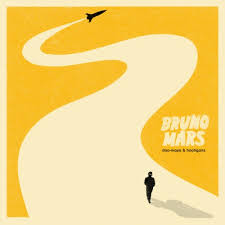 Take the song "Grenade" for instance, wherein Bruno Mars sings a litany of pains he’d endure for his beloved, ranging from catching a grenade, to throwing his hand on a blade, to taking a bullet through his brain. His beloved is evil, it seems. According to the song she’d “smile in (his) face then rip the brakes out of (his) car.”
Her response to his “loving” rant is total indifference. He goes so far as to lament that if his body was on fire she’d watch him burn in flames. Yet, despite all this, at the end of the song he still sings, “I would die for you baby, but you won’t do the same.”
It seems that Bruno has so effectively broken the stereotype of the emotionless, standoffish male that he has become the psychotically needy girlfriend. Good boy, Bruno. Contemporary, feminized society has trained you well in the ways of “manhood.” The lesson of this song is clear: if it isn’t co-dependence, it isn’t real love.
In a recent drive to work I turned the radio dial in a vain attempt to avoid Grenade only to find it on three other stations. Moving on…
In one of the most popular songs of 2010, "Breakeven," singer Danny O'Donoghue laments after a hard breakup, “I’m still alive but I’m barely breathin’.” Everyone who has had their heart broken can relate with those words. But he goes on to sing, “What am I supposed to do when the best part of me was always you?” Romantic words? Yes. Emotionally healthy words? No.
No offense Danny, but if the best part of you was her I can see why she dumped you. While a couple is called to unity, individuals still need to maintain autonomy for a relationship to be stable and lasting. If people lose themselves in one another, soon there is no self to give to the other. The lesson of "Breakeven": if it isn’t enmeshment, it isn’t love.
In the song "Animal" by Neon Trees, vocalist Tyler Glenn sings, “We’re sick like animals…I won’t be denied by…the animal inside of you…Take a bite of my heart tonight.” Tyler, you and anyone who looks like you won’t be dating my daughter. The lesson of this song is echoed in countless others: if it isn’t promiscuous, it isn’t passion.
And Miranda Cosgrove, a Nickelodeon (i.e. children’s TV channel) actress, in "Kissing You" sings to her boyfriend before an audience of millions of pre-teen girls, “When I’m kissing you it all starts making sense!” And answers to questions like, “Are you the one I should trust?” become “crystal clear…when I’m kissin’ you.”
The lesson of this song is that physical intimacy is the way to discern if a given relationship is the right one. I hate to break the news to you, Miranda, but that feeling you’re getting while kissing him is oxytocin. It’s a neuro-peptide released during physical intimacy that decreases your ability to reason and increases your ability to bond. It produces the polar opposite of clear thinking. Furthermore, when you’re engaging in heavy kissing with your boyfriend, Miranda, I can almost guarantee that he’s not thinking, “You’re the one I should trust.” It’s more likely that he’s thinking, “You’re the one I should do more with than kiss.”
I’m not even going to attempt to tackle what most rap songs say about relationships because their content, packed with sexual deviance and hedonism that border on violence is more fitting for a hard core porn magazine or a "Law and Order SVU" episode than the radio.
I don’t mean to sound like an emotionless Spock of a man. The songs I mentioned, with the exception of "Animal," do have some redeeming themes, and they all have great melodies. But they dismantle the prerequisite for love in the minds of the desperate pre-teens who are listening: self possession. If a person is stable enough to stand on his own two feet without falling into enmeshment and co-dependence, then, and only then, can he give himself in love to another.
And if love is contained by modesty, chivalry and purity during dating and engagement, then, and only then, can it become an internal fire that nothing can put out. In the words of John Paul II, the “fire of pleasure … burns quickly like a pile of withered grass.” But the flame of purity creates a fire that doesn’t consume its host.
Thanks in large part to misguided love songs, teens tend to mistake things like co-dependence, enmeshment, and promiscuity for love. It’s funny how the things they come to look for in dating relationships are precisely the things that set them up for failed marriages.
Parents: Pay attention to what your teens are listening to and turn those songs on your car radio into teaching moments. You might get eyes rolled back at you in reply, but what that really means is: “Thanks for looking out for me, Mom and Dad.”
The lessons packed in the love songs that are getting the most radio play today all seem to have a similar theme: if it isn’t dysfunctional, it isn’t love.
Her response to his “loving” rant is total indifference. He goes so far as to lament that if his body was on fire she’d watch him burn in flames. Yet, despite all this, at the end of the song he still sings, “I would die for you baby, but you won’t do the same.”
It seems that Bruno has so effectively broken the stereotype of the emotionless, standoffish male that he has become the psychotically needy girlfriend. Good boy, Bruno. Contemporary, feminized society has trained you well in the ways of “manhood.” The lesson of this song is clear: if it isn’t co-dependence, it isn’t real love.
In a recent drive to work I turned the radio dial in a vain attempt to avoid Grenade only to find it on three other stations. Moving on…
In one of the most popular songs of 2010, "Breakeven," singer Danny O'Donoghue laments after a hard breakup, “I’m still alive but I’m barely breathin’.” Everyone who has had their heart broken can relate with those words. But he goes on to sing, “What am I supposed to do when the best part of me was always you?” Romantic words? Yes. Emotionally healthy words? No.
No offense Danny, but if the best part of you was her I can see why she dumped you. While a couple is called to unity, individuals still need to maintain autonomy for a relationship to be stable and lasting. If people lose themselves in one another, soon there is no self to give to the other. The lesson of "Breakeven": if it isn’t enmeshment, it isn’t love.
In the song "Animal" by Neon Trees, vocalist Tyler Glenn sings, “We’re sick like animals…I won’t be denied by…the animal inside of you…Take a bite of my heart tonight.” Tyler, you and anyone who looks like you won’t be dating my daughter. The lesson of this song is echoed in countless others: if it isn’t promiscuous, it isn’t passion.
And Miranda Cosgrove, a Nickelodeon (i.e. children’s TV channel) actress, in "Kissing You" sings to her boyfriend before an audience of millions of pre-teen girls, “When I’m kissing you it all starts making sense!” And answers to questions like, “Are you the one I should trust?” become “crystal clear…when I’m kissin’ you.”
The lesson of this song is that physical intimacy is the way to discern if a given relationship is the right one. I hate to break the news to you, Miranda, but that feeling you’re getting while kissing him is oxytocin. It’s a neuro-peptide released during physical intimacy that decreases your ability to reason and increases your ability to bond. It produces the polar opposite of clear thinking. Furthermore, when you’re engaging in heavy kissing with your boyfriend, Miranda, I can almost guarantee that he’s not thinking, “You’re the one I should trust.” It’s more likely that he’s thinking, “You’re the one I should do more with than kiss.”
I’m not even going to attempt to tackle what most rap songs say about relationships because their content, packed with sexual deviance and hedonism that border on violence is more fitting for a hard core porn magazine or a "Law and Order SVU" episode than the radio.
I don’t mean to sound like an emotionless Spock of a man. The songs I mentioned, with the exception of "Animal," do have some redeeming themes, and they all have great melodies. But they dismantle the prerequisite for love in the minds of the desperate pre-teens who are listening: self possession. If a person is stable enough to stand on his own two feet without falling into enmeshment and co-dependence, then, and only then, can he give himself in love to another.
And if love is contained by modesty, chivalry and purity during dating and engagement, then, and only then, can it become an internal fire that nothing can put out. In the words of John Paul II, the “fire of pleasure … burns quickly like a pile of withered grass.” But the flame of purity creates a fire that doesn’t consume its host.
Thanks in large part to misguided love songs, teens tend to mistake things like co-dependence, enmeshment, and promiscuity for love. It’s funny how the things they come to look for in dating relationships are precisely the things that set them up for failed marriages.
Parents: Pay attention to what your teens are listening to and turn those songs on your car radio into teaching moments. You might get eyes rolled back at you in reply, but what that really means is: “Thanks for looking out for me, Mom and Dad.”
Christopher Stefanick is director of Youth, Young Adult and Campus Ministry for the Archdiocese of Denver. His personal website can be found at www.chris-stefanick.com.
Wednesday, August 25, 2010
Acclimating musicians, congregations to missal changes poses challenge
 Choir members sing during Mass at St. Mary's Church in Rochester, N.Y. (CNS file/Mike Crupi, Catholic Courier)) |
Catholic News Service
WASHINGTON (CNS) -- The new Roman Missal authorized Aug. 20 for use in the United States beginning in Advent of 2011 will pose significant challenges to both the musicians performing music based on new Mass texts and the congregations expected to learn them.
"The thing that's on most people's minds -- rank-and-file music directors -- is how to adapt to new texts, especially for things like the Glory to God, which is essentially the most heavily changed from the one we've been using for many, many years," said Charles Gardner, who is director for spiritual life and worship and director of liturgical music for the Archdiocese of Indianapolis.
In an Aug. 18 telephone interview with Catholic News Service, Gardner also expressed concern that "the most commonly used wording of the Memorial Acclamation -- 'Christ has died,' etc." might not appear in the missal. The texts made public Aug. 20 for what is now called the Mystery of Faith did not include the phrase Gardner mentioned.
One liturgical music figure said musicians should not be bothered by the changes in Mass texts. The new translation was designed to follow more closely the text in the original Latin.
"It's unleashing a lot of creative energy" among liturgical music composers, said Michael McMahon, executive director of the National Association for Pastoral Musicians, based in the Washington suburb of Silver Spring, Md.
Publishers are "on the verge of releasing ... samples of new and revised Mass settings," he told CNS.
The publisher OCP, once known as Oregon Catholic Press, is preparing a book for parishes that subscribe to its missal aids and annual "Music Issue" supplements with as many as nine new Mass settings that parishes can choose to sing.
McMahon said, "We're half-expecting there to be a grace period, at least for sung settings of various Mass parts. They did this again back in 1970 (the year the first edition of the Roman Missal was issued), which will allow people (time to acclimate themselves). There are not that many sung texts that are changing."
The Aug. 20 announcement of the implementation date by Cardinal Francis E. George of Chicago, president of the U.S. Conference of Catholic Bishops, marks the formal beginning of a more than 15-month period of education and training leading to the first use of the "third typical edition" of the Roman Missal at English-language Masses in the United States on Nov. 27, 2011.
The missal, announced by Pope John Paul II in 2000 and first published in Latin in 2002, has undergone a lengthy and rigorous translation process through the International Commission on English in the Liturgy during much of the past decade.
Since mid-April, Msgr. Anthony Sherman, director of the USCCB divine worship secretariat, and Father Richard Hilgartner, associate director, have been conducting workshops around the country for priests and diocesan leaders on implementation of the new missal. The workshops will continue into November.
Marty Haugen, composer of the widely used "Mass of Creation," has already revised his setting of the Sanctus to incorporate the new text, which now begins "Holy, holy, holy Lord God of hosts," said Tom Tomaszek, OCP's director of artists and repertoire.
Tomaszek said it might seem as if liturgical music publishers and composers will be able to cash in by selling new books with the newly mandated texts, but he said that for the past three or four years, parishes had held off from buying new hymnals and similar items because "they all knew it was coming" and didn't want to be shackled with books they could use only for a few years.
Ken Canedo, a liturgical musician and composer who was just starting to hone his craft in 1970, said of that era: "We all learned new Mass settings at the time. The difference between 1970 and 2010 or 2011, we were living in a culture of change. Just a few years before, in 1964, we changed from Latin to English. In 1970 it was just a matter of course.
"Maybe three generations have grown up with the 1970 text. We're not in a culture of change in the liturgy anymore," Canedo added. "I think in just a couple of months, if history is a guide, we're all going to get used to it and wonder what all the fuss was about."
And, in the "everything old is new again" department, World Library Publications will reissue Jan Vermulst's "Mass for Christian Unity," composed to meet the pastoral needs of English-speaking congregations trying to get used to Mass in the vernacular in 1964. "The new translation is closer to the 1964 translation than the 1970 translation," McMahon said.
"The missal itself is more musical than the previous edition," McMahon added. "I'm kind of hoping that all of us will be able to incorporate that into our liturgical repertoires."
Gardner, in Indianapolis, said the new missal encourages singing of the Preface Dialogue, which begins with the priest's "The Lord be with you." The people's response, currently "And also with you," will change to "And with your spirit." If the dialogue is sung, noted Gardner, "that would be a signal that something different is occurring."
Gardner said it would likely be difficult to teach the new Gloria to a congregation gathered for Christmas Mass, since the Gloria is omitted during Advent. He said he hopes parish music directors could find a version of the Gloria that uses one line of the prayer as a chorus, easing the transition.
Acknowledged McMahon, "We've got our work cut out for us, no question about it."
Subscribe to:
Posts (Atom)