Showing posts with label Vocations. Show all posts

Wednesday, March 28, 2012

Vocation Report: Family support and encouragement of vocations directors seen as vital

According to a report released in January by the Center for Applied Research in the Apostolate at Georgetown University, nearly 95 percent of 84 respondents in religious communities participated in some type of private prayer before entering religious life. Two-thirds attended retreats or regularly prayed the Rosary, three in five participated in Eucharistic adoration and half were involved in faith-sharing, Bible study groups or spiritual direction. 

So, which came first? Did being active in their faith lead to vocations? Or did desiring a vocation make them more active in their faith? 

Like the philosophical causality dilemma about the chicken and the egg, there may be no easy answer, nor any answer at all. 

Exposure to Faith
◗ Among respondents, 48 percent attended a Catholic elementary school, 36 percent attended a Catholic high school (compared to 22 percent of adult Catholics) and 25 percent of women religious attended a Catholic college (compared to 7 percent of adult Catholics). 
 
◗ One-third of respondents participated in a young adult group and one in five were in a youth ministry or other youth group; 24 percent were active in campus ministry or a Newman Club in college.
 
◗ 86 percent of those who professed religious vows in 2011 participated in some type of vocation program including “Come and See” experiences (61 percent) or a vocation retreat (39 percent).
 
“The issue is correlation versus causation,” Mark Gray, CARA research associate, told Our Sunday Visitor. “We know that men who were altar servers disproportionately seek vocations, and also those who have done Eucharistic adoration. But it is hard to tease out what causes people to seek vocations, the things that are some of the underlying tendencies to be active in faith, in the parish, and even in ministries.” 

More youthful

The CARA study, “New Sisters and Brothers in Perpetual Life,” was commissioned by the U.S. Conference of Catholic Bishops Secretariat of Clergy, Consecrated Life and Vocations. The respondents represent 52 women’s and eight men’s religious congregations, provinces or monasteries. None were priests. 
On average, respondents reported that they were 19 when they considered a vocation, and half were 17 or younger. Mercy Sister Mary Joanna Ruhland, associate director of the clergy, consecrated life and vocations secretariat, called that encouraging. 

“As Catholics recognize their responsibility to build a vocation culture in its parishes, schools and families, children and youth are being introduced to various vocations in the church,” she said. 

Main factors

Gray credits three main factors in building vocations for religious and clergy. Encouragement from vocation directors is important, he said. 

Who's Encouraging Vocations?
◗ 1 in 10 Catholics surveyed would encourage someone they know to enter a vocation; of that number, 28 percent attend weekly Mass or more, 3 percent attend a few times a year or less. 
 
So is family support. Yet families are not always supportive. According to CARA studies, only 32 percent of Catholics in a survey responded “yes” to the question: “Would you encourage your own child to pursue a vocation as a priest, deacon, religious brother, nun or sister?” Of those who said yes, 55 percent attend Mass weekly or more. Of those who said no, 78 percent attended Mass a few times a year or less. 

Having priests and religious brothers and sisters as role models also is crucial, Gray said, and that was easier in the “huge explosion of vocations” in the boom of post-World War II. Then, in addition to their religious lives, priests, brothers and sisters filled many roles in teaching, nursing, mission work and running parishes. 

Not so anymore. CARA senior research associate Mary Gautier attributes the drop in religious vocations, in part, to a changing society with more opportunities for the laity, especially women, to serve the Church. 

“They don’t have to go into religious life to do something meaningful,” she said. 
Gray expects the downward curve to stabilize. “The encouraging part is that we still have a good number of people each year making this choice for future growth in vocations,” he said. 

Maryann Gogniat Eidemiller writes from Pennsylvania.

Tuesday, January 31, 2012

Catholic schools and vocations to the priesthood

The example of Don Bosco

January 31st, Feast of St. John Bosco
This week, the Catholic Church in the United States of America celebrates Catholic Schools Week. The US Bishops ask us to consider the great blessing which Catholic schools are to our Church and to our community at large.
During Catholic Schools Week, we call to mind the fact that Catholic schools benefit not only the families who send their children there, but the whole Church and all society. Every Catholic, even if he has no children in Catholic schools (even if he has never had children in the schools), should see Catholic schools as hisschools – every Catholic benefits from Catholic schools, and every Catholic has a duty of supporting Catholic schools.
Today, I would like to point out one way in which every Catholic benefits from Catholics schools: Catholic schools produce vocations to the priesthood and religious life. It is particularly fitting that we consider this benefit today, the feast of St. John Bosco – the schools which he founded produced over six thousand vocations to the priesthood during his life-time (and countless more since his death).

St. John Bosco inspired over 6,000 vocations to the priesthood before his death
St. John Bosco, the founder of the Salesian Society, was born in a small hamlet near Catelnuovo, Piedmont, Italy on 16 August 1815. He died on 31 January 1888, and was canonized by Pope Pius XI in 1934.
Don Bosco was filled with a great charity for the poor boys of Turin and other cities, and so he dedicated his life to the education and care of street children, delinquents and other poor youths. His devotion to St. Francis de Sales (which led him to dedicate his society to this great Doctor of the Church) directed him to employ gentler teaching methods based on love and kindness rather than punishment.
In addition to providing good education, safety, and religious instruction to the boys, St. John Bosco’s schools provided the young men with the opportunity of discerning a vocation to the priesthood or religious life. The statistics are amazing:
“At the time of Don Bosco's death in 1888 there were 250 houses of the Salesian Society in all parts of the world, containing 130,000 children, and from which there annually went out 18,000 finished apprentices. […] Up to 1888 over six thousand priests had gone forth from Don Bosco's institutions, 1,200 of whom had remained in the society.” (From the Catholic Encyclopedia)
It is often said that a priest may be happy if he helps two young men to discern a call to the priesthood – one to replace himself, and another to serve for the expansion of the Church. St. John Bosco directly helped six thousand young men to answer the call! All this was possible only through the Catholic schools that Don Bosco founded. Who can doubt the importance of Catholic schools?
St. John Bosco was himself very pleased with this good work accomplished through his schools, and he wrote (in 1883, when there were still many more vocations to come): “I am happy now! I have careful statistics drawn up and we have found that more than two thousand diocesan priests [not counting the religious] have come from our houses. Let us thank the Lord and his holy Mother for having given us the means to do all this good.” Further studies after the Saints death confirmed that the number of vocations was even higher than he had realized!
An example: The Diocese of Great Falls – Billings (my diocese)
The role which Catholic schools play in helping a man to discover and answer the call to the priesthood hits very close to home for me. I myself first thought of becoming a priest through the influence of the Catholic schools in my home town of Billings, MT. Could God have used some other means? Surely. But, in point of historical fact, I (and the Diocese of Great Falls – Billings) owe my vocation to the Billings Catholic School System, and to Billings Central Catholic High School in particular. Thus, in my own life, the connection between Catholic schools and priestly vocations is most significant.
Further, though it is only a small example from a small diocese, I cannot help but mention the impact which Catholic schools have had on vocations to the priesthood in recent years for the Diocese of Great Falls – Billings, in eastern Montana. I will speak to this connection from my experience as a seminarian and priest for the Diocese.
It has been about ten years since I entered the seminary, and I have personally known every seminarian for the Diocese of Great Falls – Billings since that time. In the past ten years, twelve young men who had attended some level of Catholic schools entered the seminary for our Diocese. Now, some have left, some have been ordained, and the largest group of them are still in the seminary – but, the point is that twelve men have entered seminary to discern this call after having attended some level of Catholic school education.
While we would certainly desire this number to be greater, it will be good to compare this statistic with the number of men in the past ten years who have studied as seminarians for our diocese without having gone to any level of Catholic schools: Two. In the past ten years, there have only been two men who did not go to Catholic schools and who studied as seminarians for the Diocese of Great Falls – Billings.
Now, to be fair, I am not including in these statistics a couple of special cases. There have been a couple of older gentlemen who entered the seminary in their fifties, but these are obviously special cases (and, in point of fact, they may well have gone to Catholic schools in their youth, but I do not know for sure). Additionally, our diocese has ordained one man who used to be an Episcopalian priest.
However, setting these exceptional cases aside, the Diocese of Great Falls – Billings has a ratio of 12 to 2 in favor of Catholic schools, when it comes to vocational discernment in recent history. And this is all the more significant considering that our diocese has only a very limited number of Catholic schools!
Considering that there are far more than ten times as many Catholic boys in eastern Montana who attend public schools than those who attend Catholic schools, the fact that only two from the public schools have entered the seminary (as opposed to the twelve who had attended Catholic schools) is simply astonishing.
Who can reasonably doubt the positive impact which Catholic schools have had in producing priestly vocations in the Diocese of Great Falls – Billings? Can there be any doubt that promoting Catholic schools in this diocese will help to produce more vocations?
Catholic schools: A part of the solution to the priest shortage
Now, I’m not going to say that Catholic schools are the whole answer to gaining more vocations to the priesthood. Indeed, I do not even claim that the Catholic schools are the most important factor – other realities, like family life, have a far greater impact on a young man’s ability to discern a call to the priesthood.
Still, there can be no doubt that Catholic schools have played and will continue to play a significant role in producing priests for the Church. For this reason, we all should thank the good Lord for the gift of Catholic schools, and we should remember that (whether or not we have a child in the schools) every Catholic school is our Catholic school.

My sister the hermit

My sister is a hermit. No, she’s not shy. I don’t mean that.


Mary making her vows

No, she doesn’t just hide in her room. Well, sometimes she does, but that’s not what I mean either. And I am not trying to be funny and imply that my sister is a crab. When I say that my sister is a hermit I mean is that she is a religious hermit, a consecrated person, a diocesan hermit to be exact. Did you think there weren’t any of those around since about 500 AD? Well, there are. And today you are going to meet one.
Mary making her vows

No, she doesn’t just hide in her room. Well, sometimes she does, but that’s not what I mean either. And I am not trying to be funny and imply that my sister is a crab. When I say that my sister is a hermit I mean is that she is a religious hermit, a consecrated person, a diocesan hermit to be exact. Did you think there weren’t any of those around since about 500 AD? Well, there are. And today you are going to meet one.

Meet Mary, in her mid-thirties. Last summer, our local bishop received her eremitic vows, during a Mass at a small Polish parish on the west side of town, in the presence of three priests, a master of ceremonies and immediate family members, their spouses and children. Taking these vows, Mary became a professed hermit, the first ever in our diocese.

“We have great reason to rejoice,” said the bishop in his homily at the Mass of the Rite of Public Profession of the Evangelical Counsels for a Person Following the Eremitic Life, “for Mary becomes the first professed hermit in the diocese … the consecrated life of a hermit goes back to the early years of the Church. Today, Mary embraces a station of life where she separates in some ways from world to be more united with the Lord Jesus.” Encouraging her assembled family he continued, “Be assured we can still talk to her, but most of her day will be spent in prayer. “

And it is.

According to definition, a hermit withdraws from the world, and spends most of the day in seclusion and silence, praying and fasting. A hermit publicly professes the evangelical counsels of poverty, chastity and obedience, and follows a rule of life that the local bishop has approved. Mary’s specific rule and vows reflect her vocation of being a hermit of “crucified love”, which means her “plan of life” is centered on Christ crucified. Mary begins her day, fittingly, with Mass and spends many hours praying before the Blessed Sacrament. Because her “charism” is crucified love, she makes certain to spend the particular hours of noon to 3 p.m. in prayer and Adoration in church. Additional prayer and good works-physical and spiritual – accompany her time.

The bishop stated in his homily during the Mass at which Mary took her vows, that Saint Paul wrote that many in the culture think those following Christ are strange or foolish. He pointed out, “the foolishness of God is wiser than human wisdom” (1 Corinthians 1:25). The bishop also stated that the Blessed Mother stood at the foot of the cross and is a role model for Mary, my sister, as she seeks to live out her vocation. Since Mary made her vows on the feast of Saint Monica, the bishop reminded Mary that Saint Monica can also be a role model for her as she demonstrated steadfastness and a prayerful life.

How did Mary come to this place in her life?

Mary studied languages and theology at the University of Notre Dame, where she also played a role in starting Eucharistic Adoration on campus and a prayer group on the vocation of women. She graduated in 1999, then spent five months in a hermitage to discern her life’s work and proceeded to contact a priest she knew who was going to found a mission in Eastern Siberia, Russia. He spoke to his order’s founder and received permission for Mary to accompany him and a religious sister the following year into Siberia.

During this time, Mary stated that her particular vocation became very clear. “Jesus was calling me to live a spirituality of littleness, spousal love and the Cross,” she said


Mary with Children at Orphanage

From 2003 to the Spring of 2011 Mary lived as what she calls a “pilgrim hermit”, dividing her time between praying and serving the poor in missions and spending time of solitude in hermitages. While in the mission work she worked with the local bishop and lived within a parish or religious community that had invited her. Mission work varied greatly and included serving some of the more than 200,000 people living in trash dumps in the Philippines, caring for sick and orphaned babies in Tanzania and orphaned children in South Africa, giving retreats in Eastern and Western Europe, weeding gardens, visiting prostitutes and working on prayer teams. Mary insists that her most important work was and is prayer, and she sometimes spends up to seven or eight hours daily praying or in the presence of the Holy Eucharist.

 In the spring of 2011 Mary felt strongly that God was calling her to “somehow be buried even deeper in the Church.” “Jesus had been showing me clearly over time how the greatest way I could touch and serve all those suffering … in the world is through more intensified prayer and less travel to physical missions,” she said. She met with the bishop then to discuss her vocation.

The hermit’s life of silence and solitude is not absolute. Mary’s life follows a plan of life daily including times of complete silence/solitude, but also allows for times of “work” which can include manual labor, language study, works of mercy if a dire need arises, personal spiritual growth, and some very limited spiritual correspondence/direction with people seeking help, as well as occasionally giving retreats or talks, all under the direction of the bishop.

 Mary lives a simple life. She dresses plainly, although she has no formal “habit”. Some of the younger nieces and nephews (she has more than 50) call her “Auntie Brown” because of the shades-of-brown clothes and sandals or boots that she wears most of the time. She’s allowed to have some visit time – just not much, and she doesn’t attend social events, parties or get togethers, as a general rule.

Mary’s favorite thing to do, when she is able to visit with family, is cuddle with the youngest nieces and nephews or to strum the guitar and sing with them. She always has a baby on her hip. Mary, the ninth of 13 children, lives in her parents’ home and has a small retreat hermitage on part of their property, where she spends additional prayer time. The building is simple, unheated, and has just enough room for a rocker, a kneeler, a huge crucifix and a blanket. It is there that Mary, when she is not in church, brings her intentions before the Lord.

Mary might not be what you would imagine a hermit to be. She is bubbly, talkative, whenever she is not silent. She’s not only smart, but funny as well. She smiles a lot . She has a cute dimple. The teenagers find it easy to talk to her. She listens to them and people have called her non-judgmental, which you may find surprising for such an outwardly religious person. She has great depth and wisdom for a woman so young. She loves God above all else. Oh, and she likes ham sandwiches.

Mary really did not want me to write this article, because she doesn’t want the attention put on herself. She points to God; she loves Him fiercely. But I convinced her it was okay, telling her that you all would want to know about his as an option – for yourselves or your children – and to know how this all might work if you choose it. Besides I’m her godmother, and older sister. I know how to pressure, even a hermit.

My husband and I recently celebrated 25 years of marriage and attended a Mass celebrated by our bishop. When he saw us afterwards he said, “And how is Mary? I haven’t seen her in awhile.” We could not help ourselves in responding spontaneously, “You haven’t seen her?! Well you know she IS a hermit, remember?” Heh. Heh. He did.

Our bishop sums up my sister’s vocation thus, “(Mary) offers her life as bride and spouse of Jesus and as a prayer for others, as a prayer for the Church, for her family, for priests and for her spiritual children and all intentions the Lord places on her heart. I for one am going to be counting on her prayers.” I guess I’d have to say, Yes me too! Basically, she is our family’s – and the world’s – prayer warrior.

So there you go, something more to think about today and to consider – the life of a modern hermit. The face is different than you had thought initially a hermit would have, isn’t it? I know, me too. I never in a million years thought it would be the face of my little sister. But it is, and I am so proud of her. She is a blessing to the world and I just wanted you to meet her, if only briefly before she goes back into obscurity.

My intention is not to laud the praises of my sibling, though. Oh no, she herself would shun the attention. My hope is simply to share information about this beautiful, ancient vocation with you, so you can ponder it and see one version of what it looks like.

Vocation is as unique as each individual is. One married woman’s call is not exactly like another’s, and one woman’s call to consecrated life is not a carbon copy of another’s either. Becoming a consecrated religious as a diocesan hermit is an option today as much as it was hundreds of years ago, and I would like to leave you with this thought: As you are helping your children consider their vocations – married, single or consecrated religious, don’t forget to tell them there are many ways to serve Christ. Don’t forget to tell them to listen to that small, soft voice of God guiding them. And don’t forget to tell them about the hermit option. I assure you that there is still a place for hermits in the modern world. I know because one of them is my sister.

“Most people do not relate their years of study at Notre Dame to a dance with Jesus. But I guess I am not like most people. During my years studying under the Dome I realized very quickly that life was much more than the books I had to read or the papers I had to write. I began to truly understand that I had been created for a purpose. I had a Creator. Someone’s Hands actually formed my being – my Father in heaven actually breathed His breath into me to give me life. Jesus had given His life to save me from death – He had purchased me with His blood and Love. I was not my own. I was His – His beloved.

“The closer I drew to Jesus, the farther the world of ‘college life‘ fell away… it all became a shadow surrounding His Face, His Voice, His Love, ever calling to me from the Eucharist. And so my life became a search for ‘Him Whom my heart loves…’ [1] I began to spend seven hours a day in adoration. Many would say that so many hours of prayer is a waste of time. And yet only by spending such time with Jesus could He begin to fill my heart with His Love, a Love bigger than this world’s notion of ‘love’, a Love willing to endure suffering and death. This was the sort of Love He wanted for me to share with the world.” – Mary, a Catholic hermit, 2011 +

To learn more about vocations in general, please contact your local diocesan vocations office. To learn more about a new children’s series on the topic, “Mary is a Missionary”, “John is a Priest”, write me at: TheresaThomasEverydayCatholic@gmail.com

Theresa Thomas is the co-author Stories for the Homeschool Heart (Bezalel Books, 2010 & winner of About.com Best Catholic Book of 2010), Family Columnist at Today’s Catholic News and a Contributing Writer for Integrated Catholic Life.


Friday, December 23, 2011

St. John Vianney Trading Cards Celebrate The Priesthood

A great idea for celebrating our priests and encouraging  vocations from the Archdiocese of Omaha!

by  

Editor’s Note: A huge thank you to Melia Vankat for her assistance in compiling the information for this article! LMH
Have you heard how four creative moms turned playing into praying for our priests?  The brainstorm of these clever ladies led to the creation of St. John Vianney Priesthood Cards in the Archdiocese of Omaha.  With 27 children among them they understood the need for kids to make a personal connection with priests.  Each card consists of a photo of a priest serving in the Archdiocese of Omaha and, on the flipside, “Sacramental Stats.”  These stats may include information such as ordination date, hobbies, favorite meal, favorite prayer, and fatherly advice.  The cards are randomly packaged with 8 cards per pack.  This encourages individuals to acquire and pray for all 121 priests in the collection, even the ones they may never have met otherwise.  These packs are distributed a variety of ways including local bookstores, parish festivals and parish offices.
The priesthood card project was started in 2010, the Year of the Priesthood, with a threefold mission in mind.  The primary goal was to encourage the laity to pray for priests and to introduce them to the ordinary men who are living extraordinary vocations.  Numerous stories have been shared about families and individuals praying for priests by name, even priests whom they have only “met” through the priesthood cards.  The next goal was to open the hearts of young people to consider the possibility of their own religious vocation.  One 8-year-old told Fr. Joseph Miksch that he thinks he may want to become a priest so that he can have his own priesthood card.  This is just one example of the seeds being planted in the hearts of children across the archdiocese.  The final goal was to raise funds for the Archdiocesan Seminarian Fund.  To date, the project has raised more than $20,000 for the seminarian fund in the Omaha Archdiocese.
The creators of St. John Vianney Priesthood Cards have formed Vocat Group, LLC, whose mission is to provide support and resources to individuals and groups who strive to promote vocations for the universal church.  Vocat is the Latin word for “He calls” because they know that God calls each and every one of his children to a special vocation.  They have compiled their wisdom and experience into a How To Manual.  This manual outlines the stop-by-step process that will inspire and support others who want to produce St. John Vianney Priesthood Cards in their diocese.
To read more about the St. John Vianney Priesthood Cards in the Omaha Archdiocese, visitwww.stvianneycards.com.  For more information on how to bring St. John Vianney Priesthood Cards to your diocese, visitwww.vocatgroup.com.

About Lisa Hendey, Author Of This Post

Lisa Hendey
Lisa Hendey, Catholic wife and mom, is the founder and webmaster of CatholicMom.com and the author of A Book of Saints for Catholic Moms: 52 Companions for Your Heart, Mind, Body and Soul and The Handbook for Catholic Moms: Nurturing Your Heart, Mind, Body and Soul. Lisa writes for several online and print publications, enjoys speaking around the country and hosts the weekly Catholic Moments Podcast. Visit her at LisaHendey.com.

Thursday, July 21, 2011

Ordination of John Russell Johnson

JOHNNY-JOHNSON
John Johnson
John Russell Johnson will be ordained into the presbyterate of the Archdiocese of Louisville on Saturday, August 27, 2011 at 10:00 am at the Cathedral of the Assumption, 443 South Fifth.

Reception follows in Undercroft. The people of the Archdiocese are encouraged to attend this joyful celebration. For more information, contact the Vocation Office at (502) 636-0296 

Tuesday, July 5, 2011

Trials of religious life

National Catholic Register by Father Brian Mullady:

In the Gospel according St. Matthew, Jesus explains that in the resurrection of the dead, people will no longer marry nor be given in marriage, “but they are like angels” (22:30).

This is a foundational text for religious life, but it isn’t easy to understand. For, while many Catholics believe men and women in religious life are like angels or plaster of Paris statues with no problems or weaknesses, Jesus means something different. He speaks of a new relationship between the body and the soul in heaven. In fact, the body will come to exist after the manner of the soul. There will be a new spousal relationship of the body, which will be the vehicle of giving the gift of self entirely to God.

Men and women committed to their religious vows are not angels, but, rather, seek to bring their earthly lives into conformity with this heavenly reality. Their witness serves as a beacon for all the faithful, helping us to prepare for our eternal life with God.

There is a second foundation text for religious life: Matthew 19:1-12. Here, Jesus explains that there was no divorce “in the beginning” (19:4), and so divorce is not only contrary to the sacrament of the New Testament, but is also against the nature of marriage. The apostles react very strongly to this teaching and proclaim marriage inexpedient. If you cannot get out of it, why do it?

Jesus does not accept their teaching, but instead places the whole question of marriage in the context of the state of the human race before sin entered the world. Before the fall, spousal union perfectly expressed the communion of hearts and minds ratified through the “one flesh” union of the man and woman. The body in this state was a means to give the gift of soul.

Then, Jesus teaches that some people are called to give up this spousal love — after the manner of this earthly world — in light of the spousal love that will be experienced in the next. “There are eunuchs who have made themselves so for the sake of the Kingdom of heaven” (Matthew 19:12). One should note that this renunciation of marriage is not because there is anything evil about the body or marriage. One can only freely renounce this good to live as though in heaven. Not everyone is called to do this, “but only those to whom it is given” (Matthew 19:11).

This is the origin of the religious life. The religious life is not the same as the priesthood nor is one inserted in the other. Both priests and laypeople become religious, as can be seen with religious brothers and sisters. The one is about consecrating the Eucharist; the other about living the counsels revealed by Christ — like the one concerning marriage.

Together, with one’s own will in obedience and the ability to own and use material goods in poverty, religious men and women strive to desire the perfect love of God. Since Christ sends the Holy Spirit into each baptized person’s heart with sanctifying grace, one must now live the law of God with the pure intention of divine love.

Lust wars against this. According to 1 John 2:16, three types of lust war in man against the perfection of this love: “the lust of the flesh and the lust of the eyes and the pride of life.” Christ gave three counsels of perfection that religious embrace by vow to diminish these lusts and allow us to love Christ as he loves us. Poverty roots out the lust of the eyes; chastity, the lust of the flesh; and obedience, the pride of life.

In the three vows, religious freely embrace a way of life which, if observed well, leads to being head over heels in love with Jesus. One does not give up money, marriage and freedom because these are evil. One does so for love’s sake and because we are weak regarding these things, even when healed by grace.

The real problem is not these goods, but the fact that they are the tinder of our desire to dominate and rule others. Instead of surrendering to God, people in our state between Adam’s justice and the blessedness of the saints often manipulate others in pride and possessiveness. These counsels are recommended to free us from this desire to dominate. The real issue in lust is not feelings, but power.

Some enter a religious order and are scandalized or puzzled by the fact that everyone in it is not perfect. Religious have neither more nor less problems and special personality issues than the rest of the population from which they come. Though they desire perfect love, they have yet to reach that state. Instead, they dedicate themselves to a fixed way of life that the Church in her wisdom has approved in community to aid in this struggle to experience heaven while on earth.

A very disciplined life is necessary precisely because religious are weak like others. After leaving religious life, Monica Baldwin, in Crux of My Downfall, reassessed her previous belief that she had wasted her life in the convent: “[I] was too busy finding fault with the structure to have concerned myself with the Dweller within.” With the benefit of hindsight, she noted, “Consecrated persons cannot afford to live ‘permissively.’” This life is a supernaturally founded life and great freedom, maturity and help are needed, both from God and the community to persevere in it.

Second, the fixed way of life in community offers great encouragement. The members should know they are all in the same leaky boat, all encouraged to walk on water. Jesus is there, but he acts through others.

Friendship and the companionship of others are indispensable. As Aquinas observes in the Summa Theologiae: “The happy man in this life needs friends. … He does good to them, he delights in seeing them do good, and in turn they help him and do good to him.”

Lastly, community is necessary to correct our faults. Real friends can do this.

Someone once compared community life to a heap of stones put in a can. They are rough and ready. As they turn over and over in an enclosed can, the friction rubs off the rough edges and polishes them as jewels. Listening to God in prayer and to others in the community are the best ways to work through the frustration, anger and loneliness that many of us feel in each of our vocations.

Religious life is meant to be a sign and witness to the happiness of the life of grace here on earth and in a heaven already begun. When religious are happy, mature and well adjusted in their sacrifice, then they can begin to really show the kind of joyful love Jesus has to the whole human race. What better argument that heaven is somewhere we should desire. “Not all men can receive this precept, but only those to whom it is given” (Matthew 19: 11).

Dominican Father Brian Mullady is a mission preacher and adjunct professor at Holy Apostles Seminary in Cromwell, Connecticut. He entered the Dominican Order in 1966 and was ordained a priest in 1972.

Discerning a religious vocation? Check out 'religiouslife.com'


I am considering joining a religious order as a brother after certain obligations to my family are met. I am interested in orders active in communities (Franciscans, Marians, etc.). Is there a good general source of information on religious orders in general- locations of vocational offices, admission requirements, etc.

You need to check out the website of the Institute on Religious Life available at www.religiouslife.com.  That’s where you should start your journey.  Prayers for you from all of our readers.

Sunday, June 5, 2011

Change in Catholic family life and size and reduced vocations

Sister Mary Ellen and Sister Margaret Zimmerman
Sibling Sisters Mary Ellen Zimmermann (left) and 
Margaret Zimmermann are both retired at Mount Carmel in Dubuque.
THOnline.com

Thousands of tri-state area Catholic families are only a couple of generations removed from daily Mass, nightly family rosaries and schools staffed by religious sisters.

It was from that heavily religious milieu that hundreds of priests, brothers and sisters, often from the same family, found their calling.

Sisters and siblings Margaret and Mary Ellen Zimmermann answered the same inner call at different times. They were the youngest of four children, whose parents "couldn't have been better," according to Margaret, providing their children with an "ideal family life." That included education at Catholic schools taught by Sisters of Charity of the Blessed Virgin Mary, or BVMs, in Milwaukee where the family lived.

"I admired the Sisters very much. They were happy, generous, gracious and a wonderful example to us," Margaret said.

Inspired by that paradigm, she entered the convent at 17 to become a BVM. In five decades of work, she taught and administered in schools, a retirement home and the BVM headquarters in Dubuque.

As a teenager, Mary Ellen often visited her sister at the BVM convent.

"I could see she was happy and the sisters were having good times together and enjoying life," she said.

So four years after her sister, Mary Ellen declared she also wanted to become a BVM novice. As she left for Dubuque, her father, anticipating missing his youngest child, told her to "not be afraid to come back home."

She also taught and served as a principal and a religious education coordinator. Now both women have retired to Dubuque.

These sister/sisters credit their vocations to major childhood influences -- parents who made sure their children practiced their faith traditions and Catholic sisters who taught by rote and example -- but even in heavily Catholic areas these factors have mostly disappeared:

* Only 22 percent of U.S. Catholics now attend weekly Mass.

* The number of Catholic priests has declined by about a third since 1970.

* There are only about a third as many Catholic sisters -- 58,000 -- as there were 45 years ago.

"Students don't see sisters as much because there aren't as many teaching now," said Dubuque Presentation Sister Dolores Zieser. "The example of the sisters every day was a big part," of influencing Catholic girls to choose a religious vocation, she said.

On the home front as well, demographic changes have affected religious vocations.

Where Catholic families once counted their children in double digits -- Zieser had 13 siblings -- today's families are much smaller. Where parents once expected to send a handful of their progeny off to the convent or the seminary, today they are much less likely to share their few children with the church.

In a 2010 study, more than half of recently vowed Catholic sisters said a parent or family member had discouraged their religious calling and only 16 percent said their fathers approved.

The Rev. Wayne Ressler put it simply.

"Young people today are not as exposed to religion or religious (sisters and priests) and they have so many more options for service work."

His brother and fellow Dubuque archdiocesan priest the Rev. Mark Ressler added, "The kind of environment we grew up in can never be duplicated again."

Sunday, May 15, 2011

Discernment • Vocation Office • Archdiocese of Louisville


May 2011 - Issue 7

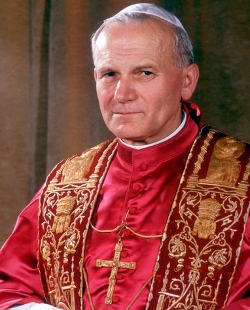
Blessed John Paul II:
Champion of Catholic Youth and Vocations
"Young people of the world, hear the voice of Christ! Hear His voice and follow Him!"

Blessed John Paul II proclaimed this message of hopeful challenge to youth throughout the universal Church during his pontificate. From the first moment he sat in the throne of St. Peter, he made this message a priority.

Having experienced a full complement of life situations during his own youth (from the death of his mother and brother to a life of hard labor under the rule of an invading army), he knew what challenges face every young person – and what potential fills them!

In celebration of his Beatification, here are some select quotes from Blessed John Paul II which provide encouragement and direction for vocational discernment:

“It is always Christ Who sends. But whom does He send? You, young people, are the ones He looks upon with love. Christ, who says, 'Follow Me,' wants you to live your lives with a sense of vocation. The search and discovery of God’s will for you is a deep and fascinating endeavor. Every vocation, every path to which Christ calls us ultimately leads to fulfillment and happiness, because it leads to God, to sharing in God’s own life.”
Manila, Philippines, January 13, 1996

"It is Jesus that you seek when you dream of happiness; He is waiting for you when nothing else you find satisfies you; He is the beauty to which you are so attracted; it is He who provoked you with that thirst for fullness that will not let you settle for compromise; it is He who urges you to shed the masks of a false life; it is He who reads in your heart your most genuine choices, the choices that others try to stifle. It is Jesus who stirs in you the desire to do something great with your lives, the will to follow an ideal, the refusal to allow yourselves to be grounded down by mediocrity, the courage to commit yourselves humbly and patiently to improving yourselves and society, making the world more human and more fraternal."
August 19, 2000 at World Youth Day in Rome

“What do you seek? Each one of us here must ask himself this question. But you above all, since you have your life ahead of you. I invite you to decide definitively the direction of your way. With the very words of Christ, I ask you: ‘What do you seek’? (Jn 1:38). Do you seek God? The spiritual tradition of Christianity not only underlines the importance of our search for God. It highlights something more important still: it is God who looks for us. He comes out to meet us. Our pilgrimage means wanting to give an answer to our needs, to our questions, to our search; it also means going out to meet God who looks for us with a love so great that we can understand it only with difficulty. This meeting with God is achieved in Jesus Christ. It is in Him, Who has given His life for us, in His humanity that we experience the love which God has for us. ‘For God so loved the world that He gave His only Son, that whoever believes in Him should not perish but have eternal life’ (Jn 3:16).”
Compostella, Spain 1989

"The priestly vocation is a mystery. It is the mystery of a 'wondrous exchange'-admirabile commercium-between God and man. A man offers his humanity to Christ, so that Christ may use him as an instrument of salvation, making him as it were into another Christ. Unless we grasp the mystery of this 'exchange,' we will not understand how it can be that a young man, hearing the words 'Follow Me!,' can give up everything for Christ, in the certainty that if he follows this path he will find complete personal fulfillment.

"In our world, is there any greater fulfillment of our humanity than to be able to re-present every day in persona Christi the redemptive sacrifice, the same sacrifice which Christ offered on the Cross? In this sacrifice, on the one hand, the very mystery of the Trinity is present in the most profound way, and, on the other hand, the entire created universe is 'united' (cf. Eph 1:10). The Eucharist is also celebrated in order to offer 'on the altar of the whole earth the world's work and suffering,' in the beautiful expression of Teilhard de Chardin. This is why in the thanksgiving after the Holy Mass the Old Testament canticle of the three young men is recited: Benedicite omnia opera Domini Domino. For in the Eucharist all creatures seen and unseen, and man in particular, bless God as Creator and Father; they bless Him with the words and the action of Christ, the Son of God."
Gift and Mystery, Ch. VIII

Prayer for Vocations by Blessed John Paul II
Lord Jesus, as You once called the first disciples to make them fishers of men, let Your sweet invitation continue to resound: Come, follow Me!
Give young men and women the grace of responding quickly to Your voice. Support Your bishops, priests and consecrated people in their apostolic labor.
Grant perseverance to our seminarians and to all those who are carrying out the ideal of a life totally consecrated to Your service.
Awaken in our community a missionary eagerness. Lord, send workers to Your harvest and do not allow humanity to be lost for the lack of pastors, missionaries and people dedicated to the cause of the Gospel.
Mary, Mother of the Church, the model of every vocation, help us to say “yes” to the Lord, Who calls us to cooperate in the divine plan of salvation.
Amen.


Thank you for taking the time to consider your vocation.


If you think God may be calling you to the serve Him in the ministry of the priesthood, please contact me.


May God bless you!


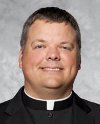
Fr. Jeff Shooner
Vocation Director
Archdiocese of Louisville

Vocation Office
Archdiocese of Louisville
vocation@archlou.org
(502) 636-0296 x1271

Wednesday, May 4, 2011

Son of New Guinea chieftan ordained a Catholic priest

Fr Peter Ripa, Society of Our Lady of the Holy Trinity (SOLT),  one of the two first native vocations from our Papua New Guinea mission will be sent to serve in the Highlands of his home country.   May 11th he will begin his new assignment in his home Archdiocese of Mount Hagen, Papua New Guinea.  The other first native priest from PNG, Fr Simon Paglau, SOLT, will be sent to west Africa later this year to open a mission in Ghana. 

Fr Peter is an intrepid witness of the Resurrection of the Lord:

Fr Peter Ripa, the son of a
chieftan, dons his traditional
dress before his ordination
to Sacred Priesthood.
"Let us make Christ present and alive in our lives daily, so that those who have less faith, lukewarm faith, nominal faith, minimal faith, may see the Risen Christ in us as a living witness. Like St. Peter in the first reading this Easter Sunday, strive and be eager to show to our brothers and sisters what you know, feel, touch, hear, see, and experience about Jesus in your life.  We will never help or touch others' life unless we live day by day in our life.

In our world today, which is now torn by war, anarchy, doubt, seeking false hope offered by the material world, injustice, hatred, anger, corruptions, graft, and so many evils in this world, let us shine out the Risen light of Christ to those who are in darkness. Although we might be one, two, three or merely a few, let us not forget the promise of Christ: "I will be you until the end of time" (Mt 28:18-20) . 

The Risen Christ will never tell a lie to us and He will Never let you and me down, so be a witness to others without fear or doubt. Jesus is the only answer to so many problems created by mankind. He put his humanity and ours to the Cross of Calvary, and won for us an unfading glory, life, and a crown forever in eternity with him in his Divine nature. If Christ is the one who died and rose for us, why not we die and live for Christ, and for other? He is our only source and savior of life."

Please pray for Fr Peter as he prepares to embrace the challenge of preaching the Risen Lord to his own people of Papua New Guinea.

Thursday, April 28, 2011

Priest on a bicycle serving the sick in Bangladesh for 35 years

From Maryknoll Fathers and Brothers

Imagine 150 million people on land the size of Iowa. Part of the country doesn’t have any infrastructure. The people are predominately Muslim with a large Hindu minority in a country that is one of the poorest in the world. It is a perfect place for a Maryknoll priest, his bicycle and a bag containing only a change of clothing and the essentials to celebrate his own Mass.

For more than 35 years, Father Robert McCahill, who was born in Des Moines, Iowa, has lived in different villages of Bangladesh. Most recently, Narail, in the southeast part of the country, was his home. He said it is “a good place to make a mark of Christianity, not for the purpose of conversion but simply for the idea of showing what a Christian is and does.”

As one of five Maryknoll priests who arrived in Bangladesh during 1975 to begin a ministry of Christian witness, the priest who was raised inGoshen, Indiana, has traveled within the interior of the country to help people, particularly children, who are in urgent need of medical assistance. His special criteria for mission: the place should be poor, no other foreigners or Christians should be present and some of the locals must be willing to allow him free use of a small piece of land so he can build his own shack.

He spends about three years in each location. Wherever he goes, especially in the local tea shops, his foreigner status draws crowds along with many questions – has he come to convert, how does he finance his work and why doesn’t he have a family.

“I am Brother Bob, a Christian missionary,” he tells them. “I am here to serve seriously sick people who are poor.”

Maryknoll Fathers and Brothers isthe overseas mission outreach of the Roman Catholic Church in the United States, following Jesus in serving the poor and others in need in 26 countries. All Catholics are called to mission through baptism, and Maryknoll’s mission education outreach in parishes and schools throughout the country engages U.S. Catholics in mission through prayer, donations, as volunteers and through vocations.

During 2011, Maryknoll Fathers and Brothers is commemorating its centennial with a theme of The Gift of Mission – The Maryknoll Journey. These missionaries will celebrate as they continue their journey into the next 100 years to share God’s love and the Gospel in combating poverty, providing healthcare, building communities and promoting human rights.

Father McCahill tells the villagers that the medical help he offers depends completely on the financial donations of his extended family and not on an organization. He advises that his purpose is to live among people who are not Christian and treat them with love, respect and brotherhood. He tells them his family is all of humanity.

“The first year many are suspicious of me,” said the priest. “The second year trust begins to build. The third year people’s affection is felt.”

Daily Routine By Bike

In Narail, villagers soon came to understand his daily routine. He rose very early to dedicate time for prayer and meditation before beginning his work. He would leave his shack of jute-stick walls, dirt floor and corrugated roof to mount a bicycle that carried him over miles of windy dirt roads (muddy roads during monsoon season) through Bangladesh’s fertile farmland.

His work included advising a family about physical therapy for a three-year-old girl with cerebral palsy, obtaining surgery for a child who suffered disfiguring and disabling burns on her arm, and helping many others who suffered from muscular dystrophy, cleft lips, hernias, tumors and broken bones. Every week, he traveled the same way as the poor, taking a bus to the capitol of Dhaka to show doctors the photos he had taken of the sick and injured children. Part of his mission is to arrange for free treatment and he makes the all-day trip with the children and their parents at the scheduled times.

"Not a great expense,” explained Brother Bob. “I afford them their tickets. I usually provide the medicine. It’s not a matter of money. It’s a matter of love, of the heart.”

Since he lives among the poor, he relies on only a modest budget that comes from donations to his ministry through Maryknoll.

“If I had lots of funds at hand to use, and lived apart (in a parish), people’s attitude to me would differ,” adding that the people would be tempted to try to wheedle money out of him. “People here understand I’m using more money for their needs than I use for my own needs. No one can look at my life of service and say ‘he can only do that because he’s a rich American.’”

All of this is far from his upbringing. He was 19 during 1956 and interested in a political science career. As he was leaving Seattle University one day, he just changed his mind.

“I received, I can’t event describe it, an attraction to God like I had never felt before nor have needed since. The motivation I received in that moment was sufficient to keep me for life, as long as I continue to remember it. My mission is to show the love of Christ, the love of God for all people of all faiths, to be with them as a brother, to establish brotherhood by being a brother to them.”

 See the video about Father McCahill on the Maryknoll Fathers and Brothers website at www.maryknollsociety.org. Follow them on Twitter at www.twitter.com/MaryknollNews and Facebook atwww.facebook.com/maryknollsociety.